

Bayerteq DSC for OIT Test – BT DSC 800 Differential Scanning Calorimeter
- Advanced Differential Scanning Calorimeter dedicated to Oxidation Induction Time (OIT) and thermal transition analysis of polymers
- Full international testing compliance with ISO 11357-6, ASTM D3895, ISO/TR 10837, ASTM D3418, and EN 728
- Broad operating temperature range from ambient up to 800 °C with ultra-stable ±0.1 °C baseline control
- High-sensitivity DSC heat flow resolution of 0.01 µW with dynamic measuring span of 0 to ±500 mW
- Dual-gas automated switching system with embedded digital mass flow meters for seamless Nitrogen-to-Oxygen transition
- Integrated 7-inch 24-bit HD color touchscreen console alongside full-featured PC acquisition and evaluation software
- Automated single-key baseline, temperature, and enthalpy calibration with certified reference standards
Request a quote for this product
The specialized dsc for oit test instrument—the Bayerteq BT DSC CN2 800—manufactured by Bayerteq is an advanced thermal analysis platform engineered specifically to measure the internal heat transitions, oxidative stability, and crystallization kinetics of raw polymeric materials. Designed in full compliance with rigorous ISO standards including ISO 11357-6 as well as ASTM D3895 and EN 728, this high-precision differential scanning calorimeter provides resin producers, pipe extruders, and quality control laboratories with definitive data on polymer antioxidant depletion and thermal longevity.
Thermal stability is a paramount parameter in polymer engineering. When polyolefins such as polyethylene (PE), polypropylene (PP), and polybutylene are processed into pipes, geomembranes, and automotive components, thermal oxidation can cause severe macromolecular degradation. Operating as a dedicated dsc for oit test analyzer, the BT DSC 800 precisely records the elapsed time between sample exposure to an inert nitrogen atmosphere and its rapid exothermic oxidation when switched to pure oxygen at an elevated isothermal temperature (typically 200 °C or 210 °C).
Bayerteq DSC for OIT Test: Principles and Thermal Analysis
The BT DSC CN2 800 integrates a next-generation micro-furnace enclosure coupled with a high-conductivity metallic sensor plate, ensuring symmetrical sample-to-reference heat flow, minimal baseline drift, and ultra-high calorimetric sensitivity down to 0.01 µW. Beyond standard oxidation induction time (isothermal OIT) and oxidation induction temperature (dynamic OIT) protocols, the instrument accommodates comprehensive thermal characterization routines:
- Glass Transition Temperature (Tg): Pinpoint sub-ambient and high-temperature glassy-to-rubbery phase changes.
- Melting Point & Enthalpy (Tm, ΔHm): Quantify true polymer melting peaks and assess crystalline fractions.
- Cold & Isothermal Crystallization: Evaluate supercooling behavior, nucleating agent efficacy, and processing crystallization rates.
- Curing & Crosslinking Reactions: Characterize exothermic curing kinetics for thermosets and crosslinked polyethylene (PEX).
Equipped with dual-line embedded digital mass flow controllers, automated gas switching, and a dedicated PC evaluation suite with automatic tangential OIT inflection detection, the Bayerteq BT DSC 800 ensures absolute repeatability in research and routine industrial certification.
Bayerteq BT DSC CN2 800 – Technical Specifications
| Parameter | Technical Specification |
|---|---|
| Model Designation | Bayerteq BT DSC CN2 800 (BT DSC 800 Series) |
| Applicable Standards | ISO 11357-6, ASTM D3895, ISO/TR 10837, ASTM D3418, ASTM D3417, ASTM E967, ASTM E968, ASTM E793, EN 728 |
| DSC Measuring Range | 0 to ±500 mW dynamic heat flow span |
| Temperature Range | Room temperature to 800 °C (air-cooled standard; optional sub-ambient cooling) |
| Heating Rate | 1 to 80 °C/min (continuously adjustable via PID software) |
| Cooling Rate (Optional) | 1 to 20 °C/min controlled cooling scan |
| Temperature Resolution & Repeatability | 0.1 °C resolution | ±0.1 °C repeatability | ±0.1 °C stability |
| DSC Resolution & Noise | 0.01 μW resolution | 0.01 μW baseline noise |
| Calorimetric Accuracy & Sensitivity | 0.1 μW accuracy | 0.1 μW sensitivity |
| Gas Flow Atmosphere Control | Dual-channel integrated digital mass flow meters (Nitrogen & Oxygen), automated software switching |
| Control & Scanning Modes | Rising temperature, constant temperature (isothermal hold), programmed multi-step thermal profiles |
| Operator Display | 7-inch 24-bit full-color LCD touchscreen with standalone real-time curve monitoring |
| PC Interface & Calibration | High-speed USB interface; single-key automatic temperature and enthalpy calibration with standard reference metals |
Key Engineering Advantages of Bayerteq BT DSC CN2 800
High-Resolution Furnace Structure
Precision-engineered micro-furnace geometry guarantees exceptional heat transfer symmetry, extremely low baseline noise (0.01 μW), and high peak resolution.
Automated Gas Atmosphere Switching
Integrated digital mass flow controllers accurately regulate purge gas flow rates and execute seamless automated switching from Nitrogen to Oxygen upon reaching the OIT test temperature.
Dual-Mode Control (Standalone & PC)
Operators can execute routine tests and monitor temperatures directly from the 7-inch color touchscreen, or conduct in-depth curve analysis via the connected PC workstation.
Automated Single-Key Calibration
Supplied with certified high-purity calibration standards (Indium, Tin, Zinc), enabling rapid one-touch mathematical correction of sensor temperature and enthalpy response.
Intelligent OIT Tangent Evaluation
Advanced software algorithms automatically locate the onset inflection point by constructing baseline tangents, eliminating operator subjectivity and manual drafting errors.
Compact Aerodynamic Benchtop Footprint
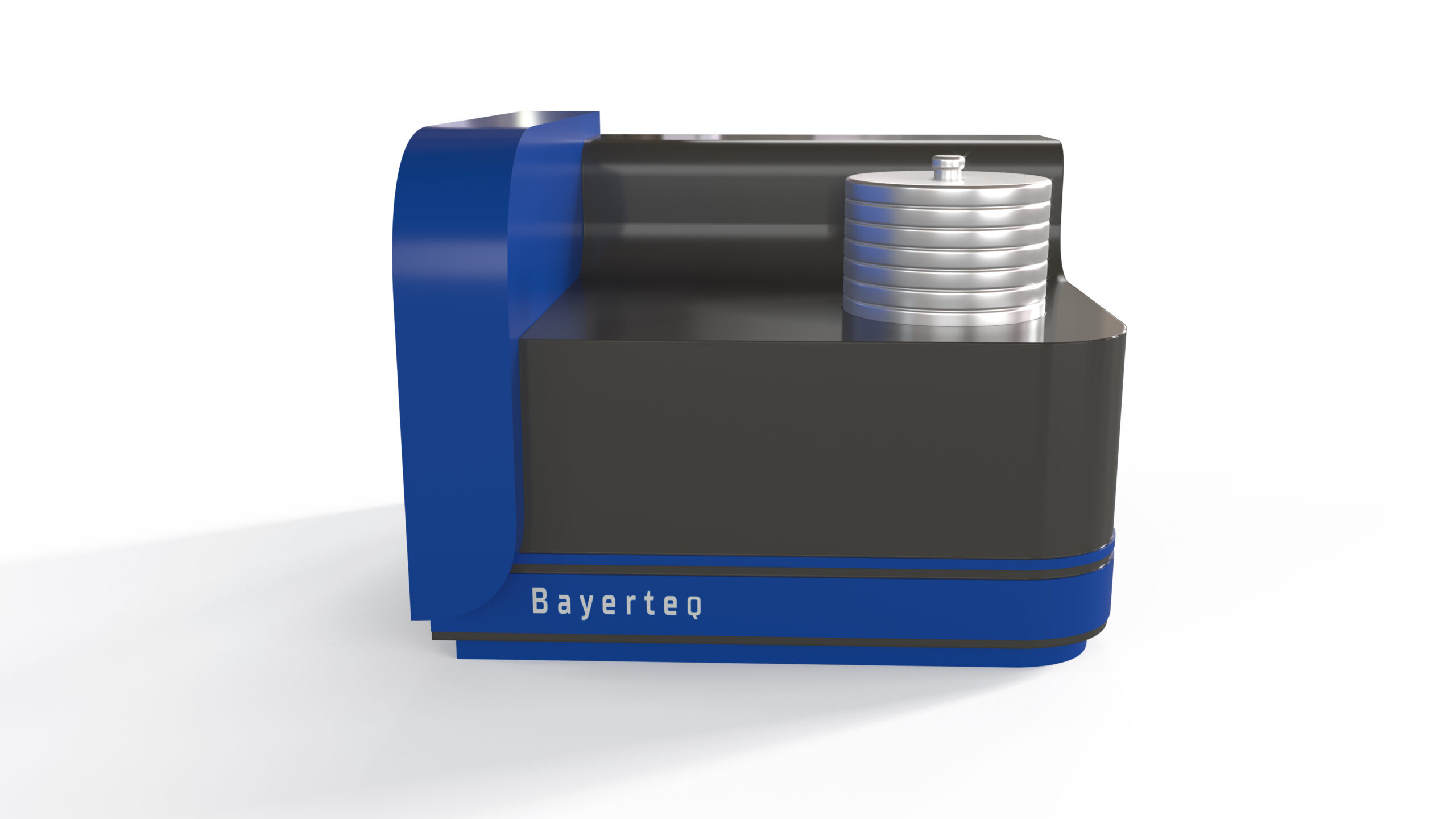
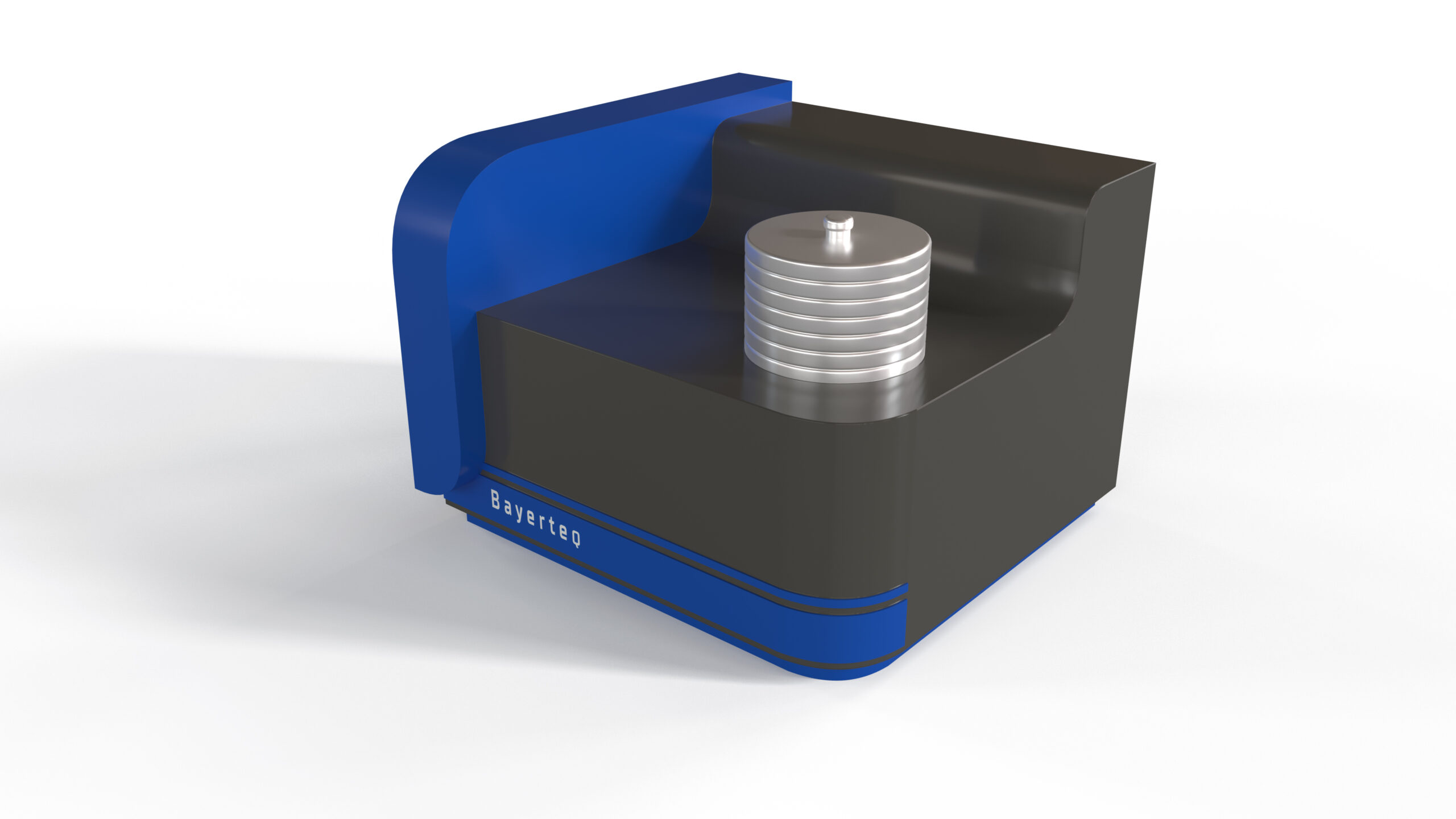
The robust blue-and-black laboratory enclosure shields sensitive thermocouple electronics from external ambient drafts while conserving valuable lab bench space.
Instrument Packages & Standard Inclusions
| Package Component | Standard Inclusion | Optional Add-ons |
|---|---|---|
| Main Calorimeter Console | Bayerteq BT DSC CN2 800 benchtop chassis with built-in 7-inch color LCD touchscreen. | Sub-ambient refrigeration unit (down to -40 °C) for low-temperature Tg analysis. |
| Atmosphere Management | Dual digital mass flow meter unit with automated dual-gas switching solenoid manifold. | Dual-stage pressure regulators for ultra-high purity N2 and O2 cylinders. |
| Crucibles & Sample Prep | Starter pack of 200 open and crimped aluminum sample pans, covers, sample tweezers, and micro-spatula. | Precision mechanical pan crimping press and alumina (Al2O3) high-temperature crucibles. |
| Software & Calibration | Windows-compatible DSC Acquisition & OIT Analysis Software with certified Indium calibration kit. | Dedicated PC workstation, printer, and Multi-Metal Calibration Standard Set (In, Sn, Zn). |
Testing Standards & Industry Applications
| Standard / Method | Testing Scope & Material Relevance |
|---|---|
| ISO 11357-6 & EN 728 | Plastics — Determination of Oxidation Induction Time (isothermal OIT) and Oxidation Induction Temperature (dynamic OIT) for polyolefin raw materials and piping. |
| ASTM D3895 | Standard Test Method for Oxidative-Induction Time of Polyolefins by Differential Scanning Calorimetry, essential for PE pipe masterbatch and resin verification. |
| ISO/TR 10837 | Determination of the thermal stability of polyethylene (PE) pipes and fittings used in gas distribution networks under elevated thermal conditions. |
| ASTM D3418 & ASTM D3417 | Determination of glass transition temperatures (Tg), peak melting temperatures (Tm), and heats of fusion/crystallization across industrial thermoplastics. |
| Target Industry Sectors | Polyethylene (HDPE/MDPE) pipe manufacturing, geomembrane and barrier liner production, cable wire insulation, polymer compound formulation, and resin synthesis QC. |