
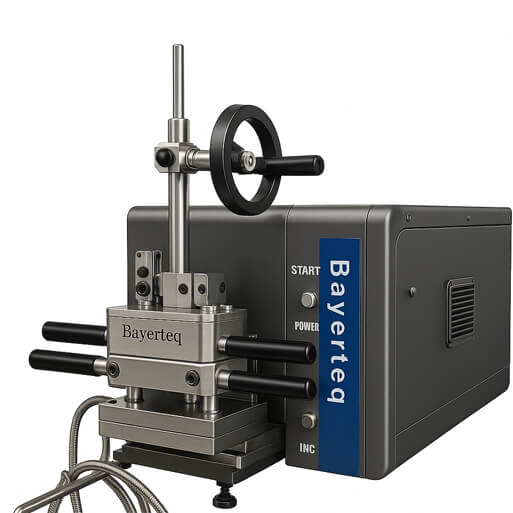


Bayerteq Rheometers for Rubbers and Polymers – MDR, Capillary & Torque Series
- Comprehensive rheological testing solutions for raw rubber compounds, elastomers, and high-performance thermoplastics
- Full testing compliance with ISO 6502, ASTM D5289, ISO 11443, ASTM D3835, and DIN 53529
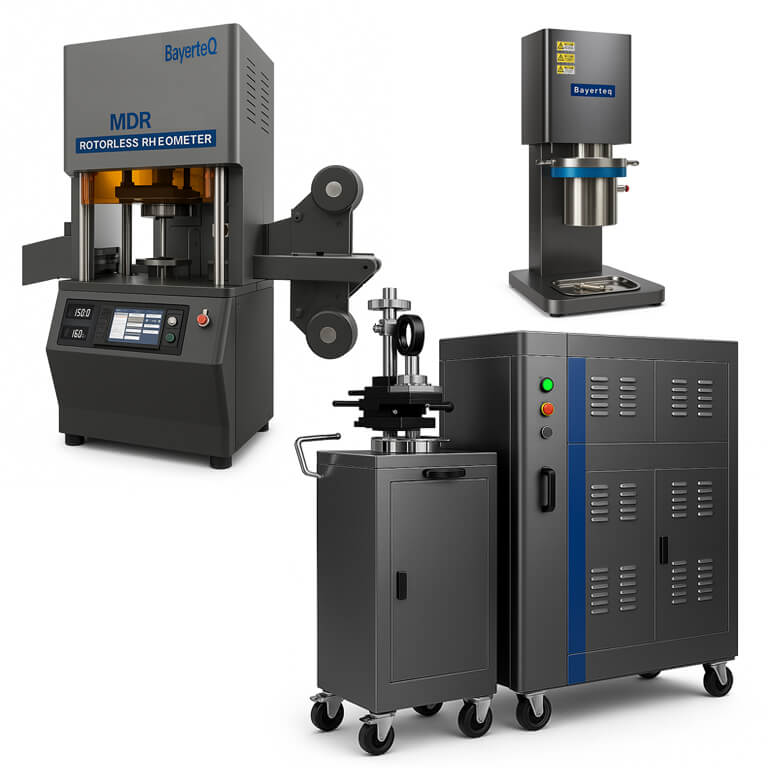
- Three distinct rheometer technologies: Moving Die Rheometer (MDR), Capillary Rheometer, and Torque Rheometer
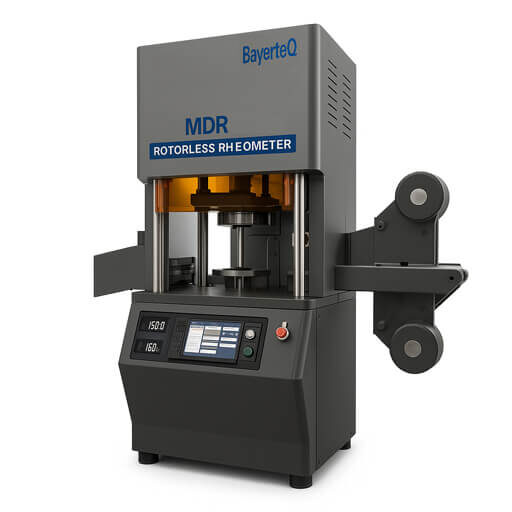
- MDR Series measures vulcanization kinetics: scorch time (ts1, ts2), optimum cure time (tc50, tc90), minimum/maximum torque (ML, MH)
- Capillary Series evaluates true shear viscosity across high shear rates ($10^{-1}$ to $10^6$ s$^{-1}$) with Bagley & Rabinowitsch corrections
- Torque Series simulates real-world internal mixing, compounding energy, thermal degradation, and extruder fusion curves
- High-precision direct-drive servomotors, dual-zone micro-gap heating, integrated PC software, and automated data archiving
Request a quote for this product
The specialized line of rheometers for rubbers and polymers manufactured by Bayerteq provides laboratories and production facilities with advanced instruments to measure how elastomeric compounds and molten plastics flow, deform, and crosslink under controlled heat, pressure, and shear. Built in rigorous accordance with international standards including ISO standards (ISO 6502, ISO 11443) and ASTM D5289, this comprehensive instrumentation portfolio enables precise raw material quality control, compound development, and industrial processing simulation.
Because polymeric raw materials undergo complex viscoelastic transformations during extrusion, injection molding, and vulcanization, rheological characterization is the critical bridge between raw chemical formulation and finished product performance. Bayerteq rheometers for rubbers and polymers deliver deep insight into molecular weight distribution, polymer architecture, filler interactions, and curing reaction kinetics, helping formulators prevent processing defects such as melt fracture, scorch, under-curing, or thermal degradation.
Rheometers for Rubbers and Polymers: Instrument Architecture
Bayerteq offers three foundational rheological testing platforms designed for distinct material states and processing regimes:
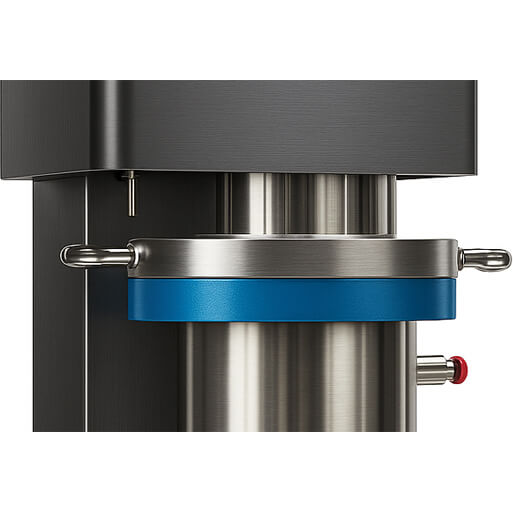
- 1. Moving Die Rheometer (MDR-A Series): The global benchmark for rubber vulcanization testing according to ISO 6502 and ASTM D5289. Features a sealed, reaction cavity where a lower biconical die oscillates at small angles (±0.5° or ±1° at 1.67 Hz) against a heated upper die. Precision digital torque sensors plot real-time cure curves, recording minimum torque (compound viscosity ML), maximum torque (crosslink density MH), scorch times (ts1, ts2), and optimum cure times (tc50, tc90).
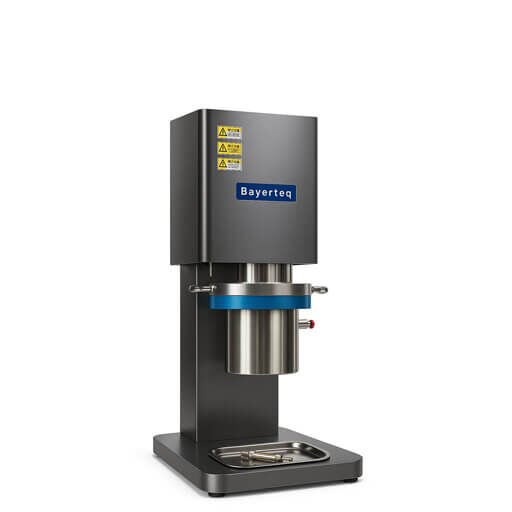
- 2. High-Pressure Capillary Rheometers: Designed to evaluate thermoplastic and rubber melts under high shear rates ($10^{-1}$ to $10^6$ s$^{-1}$) replicating industrial injection molding and high-speed pipe extrusion. A precision servo drive forces molten polymer through calibrated capillary dies to establish true shear viscosity curves, entrance pressure losses, and die swell characteristics.
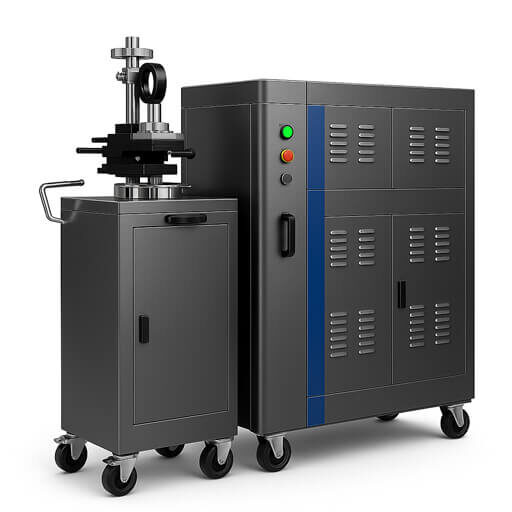
- 3. Torque Rheometers (Tabletop & Pilot Units): Simulates factory-scale compounding in a miniature, instrumented mixer or single/twin-screw extruder. Measures drive torque and stock melt temperature over time to assess dynamic thermal stability, plasticizer absorption, additive dispersion, and specific energy consumption.
Powered by intuitive PC acquisition software with automated curve overlay, statistical process control (SPC), and remote diagnostic support, these rheometers for rubbers and polymers ensure supreme formulation consistency.
Bayerteq Rheometer Series – Technical Specifications
| System Type | Moving Die Rheometer (MDR) | Capillary & Torque Rheometers |
|---|---|---|
| Applicable Standards | ISO 6502, ASTM D5289, DIN 53529, BS 903 | ISO 11443, ASTM D3835 (Capillary); ASTM D2532, DIN 54811 (Torque) |
| Primary Test Media | Uncured rubber compounds, elastomers, silicone | Thermoplastic melts, engineering plastics, masterbatches, PVC blends |
| Oscillation / Drive Frequency | 1.67 Hz (100 cpm) ± 0.1% | Variable servo speed control / High-precision piston displacement |
| Oscillation Angle (MDR) | ±0.5°, ±1°, or ±3° (Mechanical or electronic) | N/A (Continuous rotary or axial capillary shear) |
| Temperature Control Range | Ambient room temp to 200 °C (±0.2 °C stability) | Up to 400 °C / 500 °C (Multi-zone ceramic heating sleeves) |
| Temperature Resolution | 0.01 °C (Direct in-die Pt100 RTD sensors) | 0.1 °C (Melt thermocouple & barrel zone controllers) |
| Torque Measurement Range | 0.001 to 20.00 N·m (0.01 to 200 dN·m) | Torque Rheometer: up to 300 N·m dynamic mixing torque |
| Pressure / Force Capability | Pneumatic chamber clamping: 0.4 – 0.6 MPa | Capillary Rheometer: 20 kN – 50 kN load cell, up to 2500 bar pressure |
| Key Output Parameters | ML, MH, ts1, ts2, tc10, tc50, tc90, Tan Delta, Cure Rate Index | Shear viscosity, shear stress, shear rate, fusion time, degradation torque |
| Die / Chamber Construction | Sealed biconical dies with precision micro-gap seals | Tungsten carbide capillary dies; nitrided stainless mixing chambers |
| Software & Connectivity | Dedicated PC cure software, real-time S' & S'' curves, SPC | Rheological analysis suite with Bagley & Rabinowitsch corrections |
Key Engineering Advantages of Bayerteq Rheometer Systems
Rotorless Sealed Die Technology (MDR)
Precision biconical sealed dies eliminate friction losses and slippage, measuring true dynamic viscoelastic cure properties with ultra-high sensitivity.
Micro-Gap Rapid Thermal Response
Integrated internal heating cartridges and direct die-embedded Pt100 sensors recover setpoint temperature in seconds upon sample loading.
High Shear Rate Capillary Simulation
Reaches shear rates up to $10^6$ s$^{-1}$, reproducing extreme shear stresses encountered inside modern injection molds and extrusion tool heads.
Dynamic Mixing Torque Rheometry
Simulates real factory compounding, testing plasticization, filler dispersion, and thermal stability in a modular tabletop environment.
Elastic & Viscous Modulus (S' / S'')
MDR software separates dynamic torque into storage (elastic S') and loss (viscous S'') components, alongside loss factor (Tan Delta) tracking.
Automated Curve Statistical Analysis
Built-in statistical process control (SPC) with tolerance bands automatically verifies batch pass/fail status and flags formulation drift.
Rheometer Instrument Configurations & Modular Packages
| Model Family | Configuration & Drive System | Standard Inclusions & Options |
|---|---|---|
| Bayerteq MDR-A Series | Rotorless Moving Die Rheometer | Sealed biconical dies (±0.5°/1.67 Hz), automatic pneumatic closing, digital torque transducer, PC cure software. |
| Capillary Rheometer Series | High-Pressure Single/Dual Bore | High-rigidity load frame (20–50 kN), heated barrel up to 400 °C, tungsten carbide dies, Bagley software. |
| Torque Rheometer Series | Tabletop & Pilot Drive Units | Modular dynamic drive, heated mixing chamber (Roller / Cam rotors), torque sensing, extrusion attachment. |
Testing Standards & Industry Applications
| Standard / Method | Testing Objective & Rheological Scope |
|---|---|
| ISO 6502 & ASTM D5289 | Rubber — Measurement of vulcanization characteristics using rotorless shear curemeters (Moving Die Rheometer MDR). Essential for compound cure optimization. |
| DIN 53529 | Testing of rubber — Measurement of vulcanization characteristics (cure rate index, reaction kinetics, and crosslinking activation energy). |
| ISO 11443 & ASTM D3835 | Determination of fluidity of plastics using high-pressure capillary rheometers across wide shear rates, melt fracture, and thermal stability. |
| ASTM D2532 & DIN 54811 | Evaluation of polymer melt fusion behavior, dynamic thermal stability, plasticizer dry-blend absorption, and torque rheometer mixing kinetics. |
| Target Industry Sectors | Tire manufacturing, automotive rubber seals, technical elastomer molding, PVC pipe compounding, masterbatch formulation, and engineering thermoplastic compounding. |